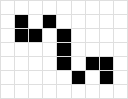
drc wrote:Wasn't there a browser Golly called 'Molly' or something? I can't find it but I seem to remember it was a little thing.
Yup. A forum search for "Molly" turns up the link right away, so I'm not sure how it was hiding from you.
At the moment it's kind of the luck of the draw what Golly functionality is included in Molly and what isn't. I don't know if Andrew and/or Chris are planning to do any further updates in the foreseeable future.
Alright, this will hopefully be my last issue. Sorry for all of these posts. Anyhoo, I don't think that my search hauls are being properly uploaded. I checked my payosha256 tag and it says I have no hauls uploaded, even though I should. What might I be doing wrong?
"It's not easy having a good time. Even smiling makes my face ache." - Frank N. Furter
What exact sieve does it use to generate those twin primes, anyway?
Also, why is it that the waterbear is the only engineered/engineerable spaceship that runs well on hashlife on high speeds? Caterpillar and centipede alongside the engineerable families are pretty sluggish, parallel HBK runs okish but jitters a lot as you speed it up, and I can't even run Gemini well on 8^0.
muzik wrote:Parallel HBK is smaller in terms of cell count. It does have a bigger bounding box but I doubt that affects anything.
Waterbear also has a much lower period, allowing hashlife to run it much more efficiently. Generally Parallel HBK is a much more complex construct and higher period that takes more hashtiles to store. I don't think the bounding box affects it that much either.
muzik wrote:What exact sieve does it use to generate those twin primes, anyway?
It uses the regular primer but adds an extension that is activated whenever a prime p shows up and only lets through the LWSS corresponding to p+2 if it appears.
I might be wrong but I think you could just have 3 of those filters in a row with something that lets them refresh if needed.
LifeWiki: Like Wikipedia but with more spaceships. [citation needed]
muzik wrote:Parallel HBK is smaller in terms of cell count. It does have a bigger bounding box but I doubt that affects anything.
Waterbear also has a much lower period, allowing hashlife to run it much more efficiently.
Well that settles it then.
BlinkerSpawn wrote:
muzik wrote:What exact sieve does it use to generate those twin primes, anyway?
It uses the regular primer but adds an extension that is activated whenever a prime p shows up and only lets through the LWSS corresponding to p+2 if it appears.
I might be wrong but I think you could just have 3 of those filters in a row with something that lets them refresh if needed.
But wouldn't such a thing let things like {97, 101, 103, 107} through and skip the 109?
muzik wrote:Parallel HBK is smaller in terms of cell count. It does have a bigger bounding box but I doubt that affects anything.
Waterbear also has a much lower period, allowing hashlife to run it much more efficiently. Generally Parallel HBK is a much more complex construct and higher period that takes more hashtiles to store. I don't think the bounding box affects it that much either.
It's also a quantitative issue rather than a qualitative one: every oscillator/spaceship has some RAM threshold beyond which HashLife will memoize every sufficiently small tile that the simulation can 'run away' exponentially quickly. I think I've managed to do this with the Caterpillar using several gigabytes of RAM.
Also, regarding your prime quadruplet discussion, Nathaniel has already done it (8 years ago):
calcyman wrote:It's also a quantitative issue rather than a qualitative one: every oscillator/spaceship has some RAM threshold beyond which HashLife will memoize every sufficiently small tile that the simulation can 'run away' exponentially quickly. I think I've managed to do this with the Caterpillar using several gigabytes of RAM.
Yup, bounding box and population both turn out to be very nearly irrelevant in most cases. The number of distinct hashtiles does go up as the bounding box increases, but usually in a very large pattern there's enough repetition that the increase is closer to logarithmic than linear.
A pattern that's a factor of 100 bigger might need only slightly more memory to run -- or sometimes slightly less, or occasionally a lot less. The big deciding factor is the period, as gmc_nxtman mentioned -- with weird super extra bonus points if the period and spaceship step size both happen to be an exact power of two.
It's fairly easy now to build an oblique Geminoid or Orthogonoid that will use the 2^N trick to run as quickly in Golly as the waterbear does -- once Golly has seen all the hashtiles once. The simulation will crawl along for one cycle (for the Orthogonoid) or the first several cycles (for the oblique Geminoid) and then accelerate radically -- kind of like those standard space-movie shots of the Enterprise or the Millennium Falcon going into hyperdrive.
Based on the URL the pattern collection was moved to, this link appears to be the natural successor of the links given in the blog post. Before May 2011, the first would have led to an interactive Java applet containing the pattern, and the second to the RLE of the pattern, just like the link above.
I have alerted Nathaniel about the prospect of patterns in the collection unused on LifeWiki. Most of them seem to have been added when it was considered more of a personal pattern collection, but some of them, such as scrubber_with_blocks.rle seem to be genuine uninteresting patterns that don't belong there. As I recall, anyone could save any pattern in the online database via the Java applet before May 2011, so this isn't too surprising.
If we let this run infinitely, will it ever become periodic, or will it grow chaotically forever, eventually producing negatives of basically every pattern known like gemini?
muzik wrote:If we let this run infinitely, will it ever become periodic, or will it grow chaotically forever, eventually producing negatives of basically every pattern known like gemini?
muzik wrote:If we let this run infinitely, will it ever become periodic, or will it grow chaotically forever, eventually producing negatives of basically every pattern known like gemini?